Healthy plants are the foundation of successful farming. However, crops can face many challenges during their growing season, and fungal diseases are among the common problems farmers and gardeners need to manage.
Diseases such as leaf spots, powdery mildew, rusts, blights, and other fungal or fungus-like diseases can damage leaves, stems, flowers, fruits, and roots.
This is where fungicides for plants can become an important part of a crop disease-management program.
Fungicides are products used to prevent, suppress, or control fungal diseases in plants. Depending on the product and disease, they may work on the plant surface or within plant tissues.
But using a fungicide does not simply mean spraying whenever a plant looks unhealthy.
A good disease-management strategy starts with identifying the problem, understanding the crop, monitoring disease conditions, and selecting a product that is legally registered and appropriate for that crop and disease.
In this guide, we’ll explain what fungicides are, how they work, their major types, common plant diseases, and important practices for using them responsibly.

Main Types of Fungicides
Fungicides can be classified in several ways.
Two useful categories for farmers are contact/protectant fungicides and systemic or locally systemic fungicides, although the exact behavior depends on the active ingredient and formulation.
1. Contact Fungicides
Contact fungicides generally remain on the plant surface.
They can help protect plant tissues from infection when applied properly and at the appropriate time.
Advantages
- Useful for preventive protection
- Can protect exposed plant surfaces
- Often form part of disease-management programs
Limitations
Because they primarily protect the plant surface, coverage is important.
Rain or new plant growth may reduce protection, depending on the product.
2. Systemic Fungicides
Some fungicides can be absorbed into plant tissues and have systemic or locally systemic activity.
Their movement and behavior depend on the active ingredient.
Potential Advantages
- Can provide protection within plant tissues
- Some may have activity against developing infections
- Can be useful when appropriately matched to a disease
However, “systemic” does not mean a product can cure every stage of every disease.
Farmers should always follow the registered product label.
3. Preventive Fungicides
Preventive fungicides are generally used before significant disease development to protect healthy plant tissue.
Preventive disease management can be particularly useful when farmers know that environmental conditions are favorable for a specific disease.
Good timing can be more important than simply increasing the amount of product.
4. Curative or Post-Infection Activity
Some fungicides have activity against certain early infections or developing disease.
However, this does not mean that heavily damaged plant tissue can always be restored.
Once plant tissue has died, fungicide treatment cannot simply return it to its original healthy condition.
Therefore, early detection and timely disease management are important.
Contact vs Systemic Fungicides
| Feature | Contact Fungicide | Systemic/Locally Systemic Fungicide |
|---|---|---|
| Main location | Plant surface | Inside or associated with plant tissues |
| Main use | Often preventive | Preventive and, for some products, early post-infection activity |
| Coverage | Very important | Still important |
| New growth protection | Usually limited | Depends on product |
| Resistance concern | Depends on mode of action | Can be significant for some single-site modes of action |
This is a general comparison. Actual product behavior depends on the active ingredient and label.fungicides for plants

Fungicides and Fungicide Resistance
One of the biggest challenges in modern crop protection is fungicide resistance.
Fungicide resistance occurs when a fungal population develops reduced sensitivity to a fungicide, causing the product to become less effective against that pathogen.
FRAC recommends resistance-management strategies designed to preserve fungicide effectiveness. These include avoiding repetitive exclusive use, using appropriate mixtures or rotations where recommended, respecting application limits, and integrating non-chemical disease-control methods.
Why Does Resistance Happen?
When the same mode of action is repeatedly used, sensitive fungal individuals can be controlled while less-sensitive individuals may survive and reproduce.
Over time, resistant populations can become more common.
That’s why farmers shouldn’t rely continuously on one fungicide or one mode of action.
How to Reduce Fungicide Resistance
Farmers can include several practices in an integrated disease-management strategy.
1. Avoid Repeated Use of One Mode of Action
Don’t repeatedly depend on the same fungicide group throughout the season.
2. Follow Label Instructions
Use the registered rate and application timing specified for the crop and disease.
3. Rotate Suitable Modes of Action
Where recommended, rotate or alternate fungicides with different, non-cross-resistant modes of action.
FRAC’s classification system helps growers and advisers understand fungicide modes of action for resistance-management planning.
4. Use Non-Chemical Methods
Disease management can also include:
- Resistant varieties
- Sanitation
- Removal of infected plant material
- Crop rotation where appropriate
- Proper pruning
- Improved air circulation
- Appropriate irrigation management
FRAC specifically identifies integrated disease management and non-chemical measures as important parts of resistance management.
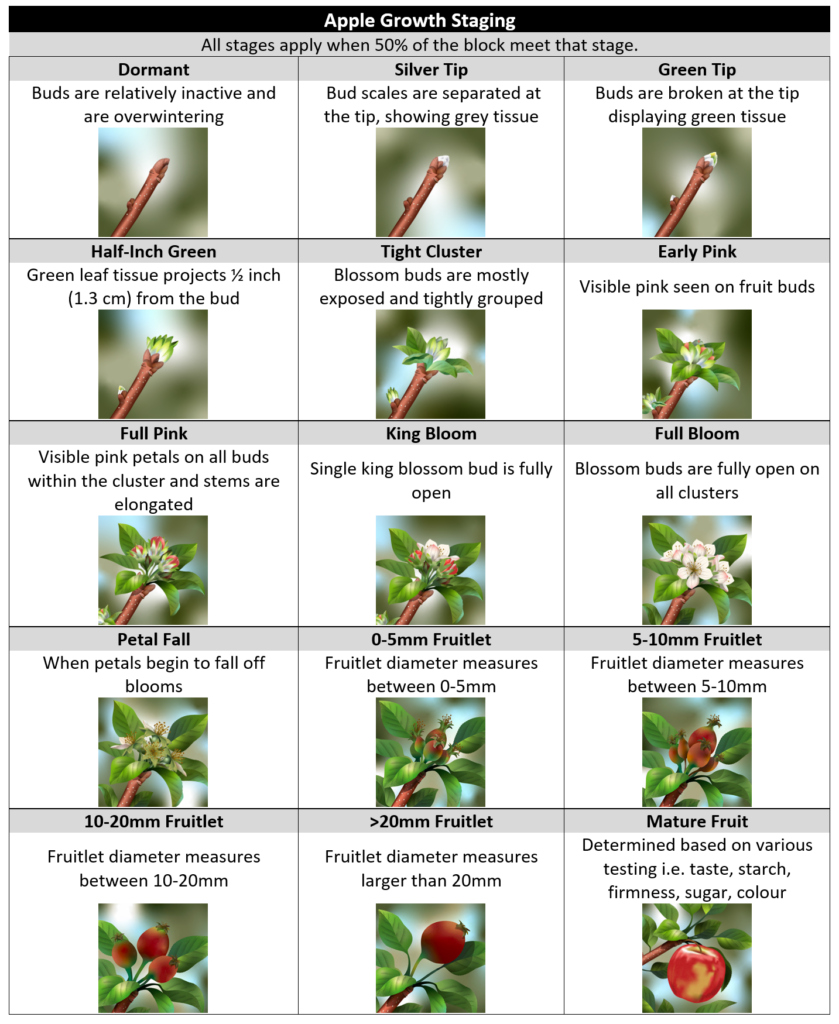
Fungicides for Apple Trees
For AgriPeaks, this is an especially important area because apple production is a major focus of your website.
Apple trees can be affected by several diseases, including apple scab, powdery mildew, and other fungal diseases depending on the region and growing conditions.
Apple disease management should not begin with randomly choosing a fungicide.
Instead, growers should consider:
- Disease identification
- Weather conditions
- Orchard history
- Variety susceptibility
- Growth stage
- Disease pressure
- Registered products
- Fungicide mode of action
For example, FRAC maintains specific resistance-management information for fungicide groups used against diseases such as Venturia, the pathogen associated with apple scab.
This demonstrates why an apple grower should consider both disease control and resistance management when planning a fungicide program.
Important Factors Before Applying Fungicides
Before applying any fungicide, farmers should ask:
What disease am I treating?
Correct identification is essential.
Is the disease actually fungal?
Not every leaf spot, yellow leaf, wilt, or fruit problem is caused by a fungus.
Is the product registered for my crop?
Always check the current product label and applicable local regulations.
What is the recommended application stage?
Timing varies according to crop, disease, product, and local recommendations.
What is the fungicide’s mode of action?
Understanding the mode of action helps with resistance management.
FUNGICIDES FOR PLANTS
How to Choose the Right Fungicide for Plants
hoosing a fungicide should not be based only on price, brand name, or the severity of visible symptoms.
The right product depends on several factors.
Consider These Points:
- Identify the disease correctly.
- Check whether the product is registered for the crop.
- Check whether it is recommended for the specific disease.
- Understand its mode of action.
- Follow the recommended application rate.
- Consider the crop’s growth stage.
- Check the weather conditions.
- Follow the required waiting or pre-harvest interval where applicable.
A fungicide that works well against one disease may have little or no value against another.
Correct diagnosis should always come before treatment.
When Should Fungicides Be Applied?
Timing is one of the most important parts of disease management.
Applying a fungicide too late may mean that significant plant damage has already occurred. On the other hand, unnecessary applications increase costs and can contribute to resistance and environmental exposure.
In many situations, fungicides are most effective when used as part of a preventive or early disease-management program.
Farmers should monitor:
- Weather conditions
- Disease history
- Crop growth stage
- Disease symptoms
- Local disease forecasts where available
- Previous fungicide applications
For diseases that develop rapidly under favorable conditions, early action can be particularly important.
Weather Conditions and Fungicide Application
Weather can strongly influence fungal disease development.
Conditions such as:
- High humidity
- Frequent rainfall
- Long periods of leaf wetness
- Poor air circulation
- Moderate temperatures
can create favorable conditions for many plant diseases.
However, the ideal conditions vary from one pathogen to another.
Farmers should therefore avoid following a fixed spraying schedule without considering current orchard or field conditions.
Fungicide Application Methods
Fungicides can be applied using different methods depending on the crop and product.
1. Foliar Spray
Foliar spraying is one of the most common methods.
The fungicide solution is applied to plant leaves, stems, flowers, or other target surfaces.
Good Spray Coverage Matters
The goal isn’t simply to make the leaves wet.
The spray should provide appropriate coverage of the plant parts that need protection.
Poor coverage can leave untreated areas where disease may continue developing.
2. Soil Application
Some fungicide products can be applied to soil to target specific soil-borne diseases.
This approach depends entirely on the product and disease.
Not every fungicide is suitable for soil application.
Always follow the product label.
3. Seed Treatment
Some fungicides are formulated specifically for treating seeds before planting.
Seed treatment can help protect seeds and young seedlings from certain seed-borne or soil-borne pathogens.
It should only be carried out with products specifically approved for seed treatment.
Fungicides for Apple Orchards
Apple orchards require careful disease management because fungal diseases can affect leaves, shoots, flowers, and fruit.
One of the best-known apple diseases is apple scab, caused by Venturia inaequalis.
Other diseases can also occur depending on the region, weather, orchard conditions, and variety.
Common Apple Disease Management Practices
Apple growers should combine:
- Regular orchard monitoring
- Proper pruning
- Removal of infected plant material
- Good orchard sanitation
- Appropriate irrigation management
- Disease-resistant varieties where available
- Timely fungicide applications when needed
- Fungicide resistance management
Fungicides should be part of an integrated disease-management strategy, rather than the only method of protecting the orchard.
Managing Apple Scab
Apple scab can cause lesions on leaves and fruit and may reduce both crop quality and marketability.
Disease pressure can increase when environmental conditions favor infection.
A good management program may include:
- Orchard sanitation
- Monitoring weather conditions
- Monitoring disease development
- Timely protective applications where recommended
- Rotating appropriate fungicide modes of action
- Following local agricultural recommendations
Growers should avoid repeatedly using one fungicide group because resistance can reduce effectiveness over time.
Fungicides for Vegetable Plants
Vegetables can be affected by many diseases during the growing season.
Common problems include:
- Powdery mildew
- Downy mildew
- Leaf spots
- Blight
- Anthracnose
- Damping-off
Different vegetables have different disease risks.
For example, a disease-management program for tomatoes may be different from one used for cucumbers, potatoes, cabbage, or peppers.
Therefore, farmers should always select a product based on the specific crop and disease.
Preventive Disease Management
Fungicides are only one part of crop protection.
Farmers can often reduce disease pressure by improving general crop management.
Maintain Good Air Circulation
Dense vegetation can increase humidity and leaf wetness.
Appropriate pruning and spacing can improve air movement around plants.
Remove Diseased Material
Infected leaves, fruits, branches, and plant debris can sometimes serve as sources of future infection.
Removing and properly managing infected material can reduce disease pressure, depending on the pathogen.
Use Healthy Planting Material
Starting with healthy seeds, seedlings, cuttings, or nursery plants can reduce the risk of introducing diseases into a field or orchard.
Avoid Excessive Irrigation
Overwatering and prolonged leaf wetness can create favorable conditions for certain diseases.
Irrigation should be managed according to crop needs and local conditions.
Common Mistakes When Using Fungicides
Even the right fungicide can become ineffective or cause problems if used incorrectly.
Mistake 1: Spraying Without Identifying the Disease
A yellow leaf does not automatically mean fungal disease.
Yellowing can result from:
- Nutrient deficiency
- Water stress
- Root problems
- Pest damage
- Disease
- Environmental stress
Treating the wrong problem wastes money and may not help the plant.
Mistake 2: Using More Than the Recommended Dose
More fungicide does not necessarily mean better disease control.
Excessive concentrations can:
- Increase crop injury risk
- Increase unnecessary chemical exposure
- Waste money
- Contribute to resistance concerns
Always follow the product label.
Mistake 3: Repeatedly Using the Same Fungicide
Repeated use of the same mode of action can increase resistance risk.
A better approach is to use an integrated program and follow appropriate resistance-management recommendations.
Mistake 4: Ignoring Weather
Rain can affect fungicide performance depending on the product and timing.
Applying a product immediately before unfavorable weather may reduce its effectiveness.
Always check the product label for weather-related application instructions.
Mistake 5: Ignoring the Pre-Harvest Interval
Some crop-protection products have a specified pre-harvest interval (PHI).
The PHI is the minimum time that should pass between the final application and harvesting.
Farmers must follow the product label and applicable regulations.
Fungicide Safety Tips
Crop protection products should always be handled responsibly.
Basic precautions include:
- Read the product label before use.
- Wear the protective equipment specified on the label.
- Avoid skin and eye contact.
- Don’t eat or drink while handling products.
- Keep products away from children and animals.
- Store products in their original labeled containers.
- Don’t reuse pesticide containers for other purposes.
- Follow disposal instructions.
- Keep spray away from water sources where required.
- Follow local regulations.
Safety requirements can differ between products, so the label is the most important source for product-specific instructions.
Fungicide Storage
Correct storage helps maintain product quality and reduces safety risks.
Store fungicides:
- In their original containers
- In a secure location
- Away from food and animal feed
- Away from children
- Away from direct sunlight and unsuitable temperatures
- In a properly ventilated area where required
Never transfer crop-protection products into unlabelled bottles or containers.
Fungicides vs Pesticides: What’s the Difference?
This is a common question among beginners.
Pesticide is a broad term for substances used to control pests.
Fungicides are a type of pesticide specifically intended to manage fungal diseases.
Other pesticide categories include:
| Type | Main Target |
|---|---|
| Fungicide | Fungi and certain fungus-like pathogens |
| Insecticide | Insects |
| Herbicide | Weeds |
| Miticide/Acaricide | Mites |
| Nematicide | Nematodes |
So, all fungicides are pesticides, but not all pesticides are fungicides.
Simple Fungicide Management Checklist
Before applying a fungicide, ask yourself:
✅ 1. Have I identified the disease?
Don’t spray without understanding the problem.
✅ 2. Is the product suitable for this crop?
Check the label.
✅ 3. Is it recommended for this disease?
Different diseases require different management strategies.
✅ 4. Is the timing appropriate?
Consider crop stage and disease development.
✅ 5. Have I checked the mode of action?
Avoid unnecessary repeated use of the same mode of action.
✅ 6. Have I checked the application instructions?
Follow the label for rate, mixing, equipment, and safety.
✅ 7. Have I considered non-chemical management?
Use sanitation, pruning, resistant varieties, irrigation management, and other appropriate practices.