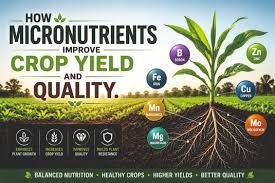
Healthy plants require more than just water, sunlight, and the primary nutrients—Nitrogen (N), Phosphorus (P), and Potassium (K). While these macronutrients are essential for growth, they are only one part of a balanced nutrition program. To achieve vigorous growth, stronger roots, better flowering, and high-quality fruits, plants also depend on micronutrients.
Although plants need micronutrients in very small quantities, their importance cannot be underestimated. Even a slight deficiency can affect plant health, reduce crop yield, and lower the quality of fruits, vegetables, and grains.
Today, continuous farming, changing weather conditions, and intensive cultivation have increased micronutrient deficiencies in agricultural soils. This is why modern farmers are paying more attention to balanced plant nutrition rather than relying only on traditional fertilizers.
Whether you’re growing apples in Himachal Pradesh, vegetables in a kitchen garden, cereals in open fields, or ornamental plants in a nursery, understanding micronutrients can help you improve productivity and maintain healthier crops.
In this complete guide, you’ll learn what micronutrients are, why they’re important, the role of each essential micronutrient, and how they contribute to successful farming.
What Are Micronutrients for Plants?
Micronutrients are essential mineral elements that plants require in very small amounts for normal growth and development. Unlike macronutrients, which are needed in large quantities, micronutrients are required in trace amounts—but they perform vital biological functions.
These nutrients help plants carry out several important processes, including:
- Photosynthesis
- Chlorophyll formation
- Enzyme activation
- Root development
- Flower and fruit formation
- Protein synthesis
- Nutrient transport
- Disease resistance
Without an adequate supply of micronutrients, plants cannot complete these processes efficiently, resulting in poor growth and reduced productivity.
A balanced fertilization program should always include both macro and micronutrients to support healthy crop development.
Why Are Micronutrients Important?
Many farmers focus only on NPK fertilizers because they are widely known and commonly used. However, applying only primary nutrients may not be enough to achieve the best possible yield.
Micronutrients improve the efficiency of major nutrients and help plants use them more effectively.
Benefits of Micronutrients
- Promote healthy green leaves
- Strengthen root development
- Improve flowering and fruit setting
- Enhance fruit size and color
- Increase crop quality
- Boost disease resistance
- Improve nutrient absorption
- Increase overall crop yield
- Support healthy seed formation
- Improve shelf life of harvested produce
Even fertile soil can gradually become deficient due to continuous cropping, heavy rainfall, erosion, or imbalanced fertilizer use.
Essential Micronutrients for Plants
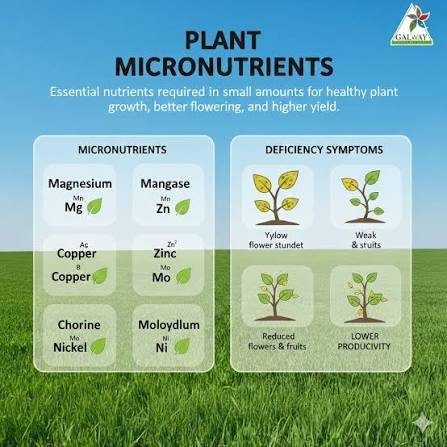
Plants require eight essential micronutrients. Each nutrient has a unique role in plant growth and cannot be completely replaced by another.
| Micronutrient | Symbol | Main Function |
|---|---|---|
| Iron | Fe | Chlorophyll formation and photosynthesis |
| Zinc | Zn | Growth hormones and enzyme activation |
| Boron | B | Flowering, pollination, and fruit development |
| Manganese | Mn | Photosynthesis and metabolism |
| Copper | Cu | Plant metabolism and disease resistance |
| Molybdenum | Mo | Nitrogen utilization |
| Chlorine | Cl | Water regulation and photosynthesis |
| Nickel | Ni | Nitrogen metabolism and seed development |

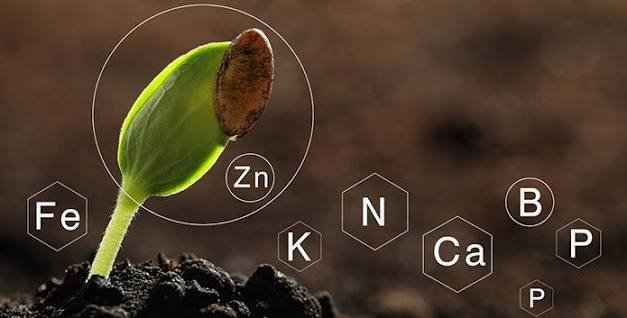
Zinc (Zn): The Growth Booster
Zinc is one of the most commonly deficient micronutrients in agricultural soils. It plays an important role in producing plant growth hormones and activating enzymes responsible for healthy plant development.
Why Zinc Is Important
- Promotes healthy leaf growth
- Encourages root development
- Improves seed formation
- Supports protein synthesis
- Helps plants tolerate environmental stress
Signs of Zinc Deficiency
- Small and narrow leaves
- Yellowing between leaf veins
- Stunted growth
- Shortened internodes
- Delayed crop development
Zinc deficiency is commonly seen in maize, rice, citrus, and apple orchards, especially in alkaline soils.
Boron (B): Essential for Flowering and Fruit Set
Boron is crucial for reproductive growth. It supports pollen development, pollination, and fruit formation, making it one of the most important micronutrients for fruit crops.
Benefits of Boron
- Improves flowering
- Increases fruit setting
- Strengthens plant cell walls
- Encourages healthy root growth
- Enhances fruit quality
Signs of Boron Deficiency
- Poor flowering
- Flower drop
- Cracked fruits
- Hollow stems
- Deformed growing points
Fruit crops such as apples, pears, grapes, and pomegranates often benefit from balanced boron applications during flowering.
Iron (Fe): The Secret Behind Green Leaves
Iron is responsible for chlorophyll production, which gives plants their green color and enables photosynthesis.
Although iron is present in many soils, plants may not absorb it efficiently, especially in alkaline conditions.
Benefits of Iron
- Maintains healthy green foliage
- Improves photosynthesis
- Supports energy production
- Encourages vigorous growth
Symptoms of Iron Deficiency
- Yellow leaves with green veins
- Reduced leaf size
- Weak growth
- Lower crop yield
Iron deficiency is particularly common in fruit orchards and calcareous soils.
Manganese (Mn): Supporting Plant Energy
Manganese activates several enzymes involved in photosynthesis and nutrient metabolism.
Benefits of Manganese
- Improves photosynthesis
- Supports enzyme activity
- Promotes healthy leaves
- Enhances disease resistance
Deficiency Symptoms
- Yellow patches between leaf veins
- Brown spots on leaves
- Slow growth
- Reduced crop quality
Copper (Cu): Building Stronger Plants
Copper is required in very small quantities, yet it plays a major role in plant metabolism and disease resistance.
Benefits of Copper
- Strengthens stems
- Improves flowering
- Supports enzyme systems
- Enhances natural disease tolerance
Copper Deficiency Symptoms
- Wilting young leaves
- Weak stems
- Delayed flowering
- Poor overall growth
Molybdenum (Mo): Helping Plants Use Nitrogen
Molybdenum helps plants convert nitrogen into a usable form. Without it, plants cannot efficiently produce proteins.
Benefits
- Better nitrogen utilization
- Improved protein formation
- Stronger crop development
Deficiency Symptoms
- Pale leaves
- Yellowing foliage
- Poor growth
- Reduced productivity
Legume crops such as peas and beans are particularly sensitive to molybdenum deficiency.
Chlorine (Cl): Maintaining Water Balance
Chlorine helps regulate water movement inside plants and contributes to healthy photosynthesis.
Benefits
- Supports water balance
- Improves leaf function
- Enhances stress tolerance
Deficiencies are uncommon because chlorine is usually available in sufficient amounts in most soils.
Nickel (Ni): Small Quantity, Big Role
Nickel is required in trace amounts but is essential for nitrogen metabolism and proper seed development.
Benefits
- Supports seed production
- Helps nitrogen metabolism
- Contributes to overall plant health
Although required in tiny quantities, nickel is still an essential nutrient for healthy crop development.
Signs of Micronutrient Deficiency in Plants
One of the biggest challenges for farmers is identifying nutrient deficiencies early. A plant may receive enough water and fertilizer but still show poor growth because one or more micronutrients are missing.
Deficiency symptoms can appear on leaves, stems, roots, flowers, or fruits.
However, visual symptoms alone are not always enough to identify the exact deficiency because different nutrient problems can sometimes look similar.
Common Signs Include:
- Yellowing of leaves
- Poor or slow growth
- Small leaves
- Weak stems
- Poor flowering
- Flower or fruit drop
- Poor fruit development
- Leaf spots or discoloration
- Reduced fruit size
- Deformed leaves or fruits
If symptoms appear across a large area of a field or orchard, farmers should consider soil or plant tissue testing before applying a specific micronutrient.
Micronutrient Deficiency Symptoms Chart
| Micronutrient | Common Deficiency Symptoms | Possible Effect |
|---|---|---|
| Zinc | Small leaves, stunted growth, short internodes | Poor plant development |
| Boron | Poor flowering, fruit development problems | Lower fruit set |
| Iron | Young leaves become yellow while veins may remain green | Reduced photosynthesis |
| Manganese | Yellowing between leaf veins, leaf spotting | Weak plant growth |
| Copper | Weak stems, poor flowering | Reduced crop development |
| Molybdenum | Pale leaves, poor growth | Poor nitrogen utilization |
| Chlorine | Wilting and water-balance problems | Reduced plant performance |
| Nickel | Poor seed development | Reduced reproductive growth |
What Causes Micronutrient Deficiency?
Micronutrient deficiency doesn’t always mean that the nutrient is completely absent from the soil. Sometimes the nutrient is present but unavailable for plant absorption.
Several factors can contribute to micronutrient problems.
1. High Soil pH
Soil pH can strongly influence nutrient availability.
For example, iron and zinc may become less available to plants in alkaline soils.
2. Continuous Cropping
When farmers grow crops repeatedly without replacing nutrients, the soil’s nutrient reserves can gradually decline.
This is especially important in intensive farming systems.
3. Excessive Use of Major Nutrients
Heavy application of nitrogen, phosphorus, or potassium can sometimes contribute to nutrient imbalances.
A balanced fertilizer program is generally better than focusing on one nutrient alone.
4. Heavy Rainfall
Rainfall can move some nutrients deeper into the soil or away from the plant’s active root zone.
This can make certain nutrients less available to crops.
5. Poor Soil Condition
Compacted, poorly drained, or low-organic-matter soils may limit root development and nutrient uptake.
Improving overall soil health can therefore support better micronutrient utilization.
Benefits of Micronutrients for Plants
Using micronutrients as part of a balanced crop nutrition program can support different stages of plant development.
Better Root Development
Micronutrients such as zinc and boron contribute to healthy plant growth and root development.
Strong roots help plants absorb water and nutrients more effectively.
Improved Flowering and Fruit Setting
Boron is particularly important for reproductive growth.
Adequate nutrition can support:
- Better flowering
- Pollination
- Fruit setting
- Fruit development
This makes balanced micronutrient management especially important for fruit crops.
Healthier Green Leaves
Iron and manganese are involved in processes related to photosynthesis.
Healthy leaves allow plants to capture sunlight and produce the energy required for growth.
Better Crop Quality
Balanced nutrition can contribute to better:
- Fruit size
- Fruit color
- Crop uniformity
- Seed development
- Overall produce quality
The actual response depends on crop variety, soil conditions, nutrient status, and application practices.
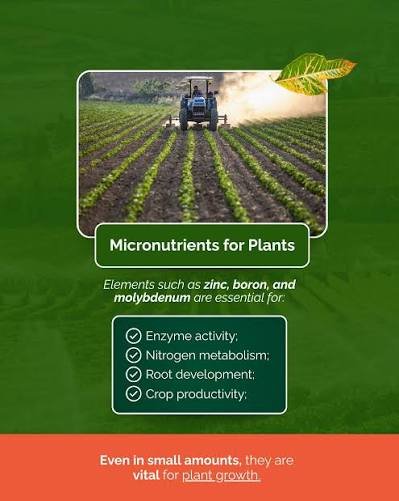
How to Apply Micronutrients to Plants
Micronutrients can be supplied through different application methods. The right method depends on the crop, nutrient, product formulation, soil conditions, and severity of deficiency.
1. Soil Application
Micronutrients can be applied directly to the soil, where plant roots can access them.
This method can be useful when a soil test identifies a nutrient deficiency or when a longer-term nutrient management plan is needed.
Advantages
- Supports root-zone nutrition
- Suitable for some soil deficiencies
- Can be included in a broader fertilizer program
2. Foliar Application
Foliar application means spraying a suitable micronutrient product onto plant leaves.
The nutrients can then be absorbed through the foliage.
Foliar application may be useful when:
- A quick correction is required
- Root uptake is limited
- A crop has a specific deficiency
- The product is specifically formulated for foliar use
Important Tip
Always follow the product label for concentration, timing, crop suitability, and compatibility.
More product does not mean better results.
Excessive concentration can damage leaves and reduce crop health.
3. Fertigation
Fertigation is the application of nutrients through irrigation water.
It is commonly used in modern farming systems, particularly where drip irrigation or other controlled irrigation systems are available.
Benefits of Fertigation
- Delivers nutrients closer to the root zone
- Can improve nutrient-use efficiency
- Allows smaller, planned applications
- Works well with irrigation management
The fertilizer or micronutrient product must be suitable for fertigation, and compatibility with the irrigation system should be checked before use.
Micronutrients for Apple Orchards
Micronutrient management is particularly important in apple production.
Apple trees require balanced nutrition throughout different stages of their growth cycle. Deficiencies can affect flowering, fruit setting, fruit development, and overall tree performance.
Important micronutrients for apple orchards include:
- Zinc
- Boron
- Iron
- Manganese
- Copper
Zinc in Apple Trees
Zinc supports normal vegetative growth and enzyme activity.
A deficiency may contribute to:
- Small leaves
- Short shoots
- Poor growth
- Reduced tree vigor
Boron in Apple Trees
Boron is especially important during reproductive development.
It supports:
- Flower development
- Pollination
- Fruit setting
- Fruit development
However, boron has a relatively narrow range between deficiency and excess, so applications should be based on crop requirements and appropriate recommendations.
Iron in Apple Trees
Iron supports chlorophyll formation and photosynthetic activity.
Iron deficiency can cause young leaves to become pale or yellow while the veins remain greener.
This problem can be more common in alkaline or high-pH soils.
How to Get Better Results from Micronutrients
Simply applying a micronutrient product is not enough. Good results depend on correct diagnosis, timing, dosage, and application method.
Follow These Practices:
1. Test the Soil
A soil test can help identify nutrient levels and pH.
2. Understand Your Crop
Different crops have different nutritional requirements.
3. Identify the Problem
Don’t assume every yellow leaf means the same deficiency.
4. Choose the Correct Product
Select a product appropriate for the crop, nutrient, and application method.
5. Follow the Label
Use the recommended dose and application instructions.
6. Apply at the Right Stage
Nutrient requirements can change during vegetative growth, flowering, fruit setting, and fruit development.
7. Monitor the Crop
Observe plants after application and adjust the nutrition program when necessary.
Micronutrients vs Macronutrients
Understanding the difference between macro and micronutrients makes plant nutrition much easier to understand.
| Feature | Macronutrients | Micronutrients |
|---|---|---|
| Required quantity | Larger amounts | Very small amounts |
| Examples | N, P, K, Ca, Mg, S | Zn, B, Fe, Mn, Cu |
| Main role | Growth and structural development | Enzymes, metabolism and specific plant functions |
| Deficiency impact | Can significantly reduce growth | Can also seriously affect crop performance |
| Application | Usually part of regular fertilizer programs | Applied according to crop and soil requirements |
Important: “Micronutrient” does not mean “less important.” It refers mainly to the amount required by the plant, not its importance.